Dealing with online trolling:
what I've learned after five years of online visibility
Written by Lea Turner, Founder, The HoLT
Five years of being very visible online means I've collected some stories. None of them are fun. Most of them turned out to be useful. And I've stopped letting any of them be the reason I stay quiet.
Let me set the scene. I'm standing in my bedroom on a Sunday afternoon when my phone starts pinging repeatedly. A man I've never met has found me on LinkedIn, Instagram, and Facebook simultaneously, and he's sending videos of a woman screaming in a dark room, telling me it's going to be me. He says he knows I live alone with my son.
That one genuinely knocked me. I'd be lying if I said otherwise.
I'm also the person who got a man sacked for messaging me "great tits" as his opening line on LinkedIn. His first ever message. Not even a hello. I posted it, tagged his employer, and his colleagues piled in to say he'd been doing it in person too and there had already been complaints. He lost his job. And then people filled the comments telling me I'd ruined his life, as if a man who decides to sexually harass strangers online bears no responsibility for his own employment status. That logic still baffles me.
WHAT NOBODY WARNS YOU ABOUT WHEN YOU START GETTING VISIBLE AS A FREELANCER OR SOLOPRENEUR
When you build a platform, you get the good stuff alongside the bad. The messages from people saying you changed something for them, the community, the business, the genuine satisfaction of doing work that actually matters. But you also become a target for people who have decided, for whatever reason, that their unhappiness is somehow your fault.
I've been trolled about how I look, my tattoos, my hair, my weight. I was extorted for eighteen months by someone who assumed I'd pay to make them go away. (I didn't.) I've had people suggest I'm only followed because of my appearance rather than anything I have to say. I've had the full spectrum, honestly.
And here's what I've learned, which took longer than I'd like to admit: hate can only land if some part of you believes it might be true. If you know with absolute certainty that what someone is saying has no basis in reality, that they don't actually know you and their opinion of your character is built on nothing, it genuinely cannot touch you. It becomes noise from someone who chose to spend their afternoon being horrible to a stranger. And whatever is going on inside a person who makes that choice is not yours to carry.
TIP FOR FREELANCERS DEALING WITH ONLINE TROLLING: When a comment stings, ask yourself honestly: is there any part of me that believes this? Usually the sting comes not from the comment itself but from an existing insecurity it's poking at. The most effective protection against online trolling isn't a thick skin. It's a clear conscience and a solid sense of your own value. Do the inner work and the comments stop having anything to grab onto.
THE PRACTICAL SIDE OF DEALING WITH ONLINE TROLLING
For the genuinely scary incidents, I take it seriously and I act on it. I don't post photos of the outside of my home. I'm careful about what could be inferred about where Dexter goes to school. I don't share my location publicly. The death threat was terrifying in the moment, but it made me put proper safeguards in place, and in that way it accidentally did me a favour.
PRACTICAL TIP:Do a quick audit of your public profiles and ask what a determined person could piece together about your daily routine, where you live, or where your kids are. You don't need to disappear from the internet. You just need to be thoughtful about what you make easy to find. Lock down location tags, be vague about specific neighbourhoods, and never post anything that shows the outside of your front door.
For the low-level stuff, the snide comments and the people who turn up periodically to tell you you're not a real expert, stop internalising it. Because you know what you've built. You know the difference you've made to the people you serve. Evidence beats an anonymous comment every time.
PRACTICAL TIP: Keep a folder of the positive responses you've had to your content. The messages that say "I needed this today," the DMs from people who took a leap because of something you shared, the clients who found you because you showed up. When the trolls arrive, and they will if you're doing it right, that folder is your reality check. Their opinion is not data. Your results are.
HOW TO TURN ONLINE TROLLING INTO CONTENT THAT WORKS FOR YOU
Mostly now I laugh, or I make it into content. If someone trolls me and I turn it into a post that resonates with thousands of people, I've won. They gave me material and got absolutely nothing in return except possibly a screenshot doing the rounds.
WORTH KNOWING: You don't have to respond to trolls, and most of the time you shouldn't. But you absolutely can use the experience. Some of the most resonant content I've ever posted came from something someone said to try to diminish me. The disbelief, the "can you believe this happened" energy, all of it is relatable to your audience because they've experienced versions of it too. You get to decide whether a troll silences you or gives you something to say.
WHY DEALING WITH ONLINE TROLLING IS WORTH TALKING ABOUT OPENLY
The reason I won't stop talking about this is not because I enjoy revisiting it. It's because I know how many freelancers and solopreneurs are sitting on content they want to share, a perspective, a story, a genuine piece of expertise, and they're not posting because they're scared of what someone might say. And that genuinely breaks my heart a bit, because the people doing the trolling are usually unhappy and usually stuck. Content, fulfilled people do not spend their days writing horrible things to strangers on the internet. That is simply not what a good life looks like. So why are we handing them the power to gatekeep our visibility?
I built a business from nothing, raised Dexter on my own, and grew a community of nearly 600 people who are genuinely kind and supportive and who want to see each other win. I did all of that while being visible as someone who doesn't look like what people expected on LinkedIn, tattooed, blonde, opinionated, and absolutely not corporate. Some people hated it. Some people loved it. And the people who loved it changed my life completely.
So no, I'm not going quiet. And I really hope you won't either.
If you're a freelancer or solopreneur looking for a community where nobody's going to tear you apart, come and find us at The HoLT: https://www.the-holt.com
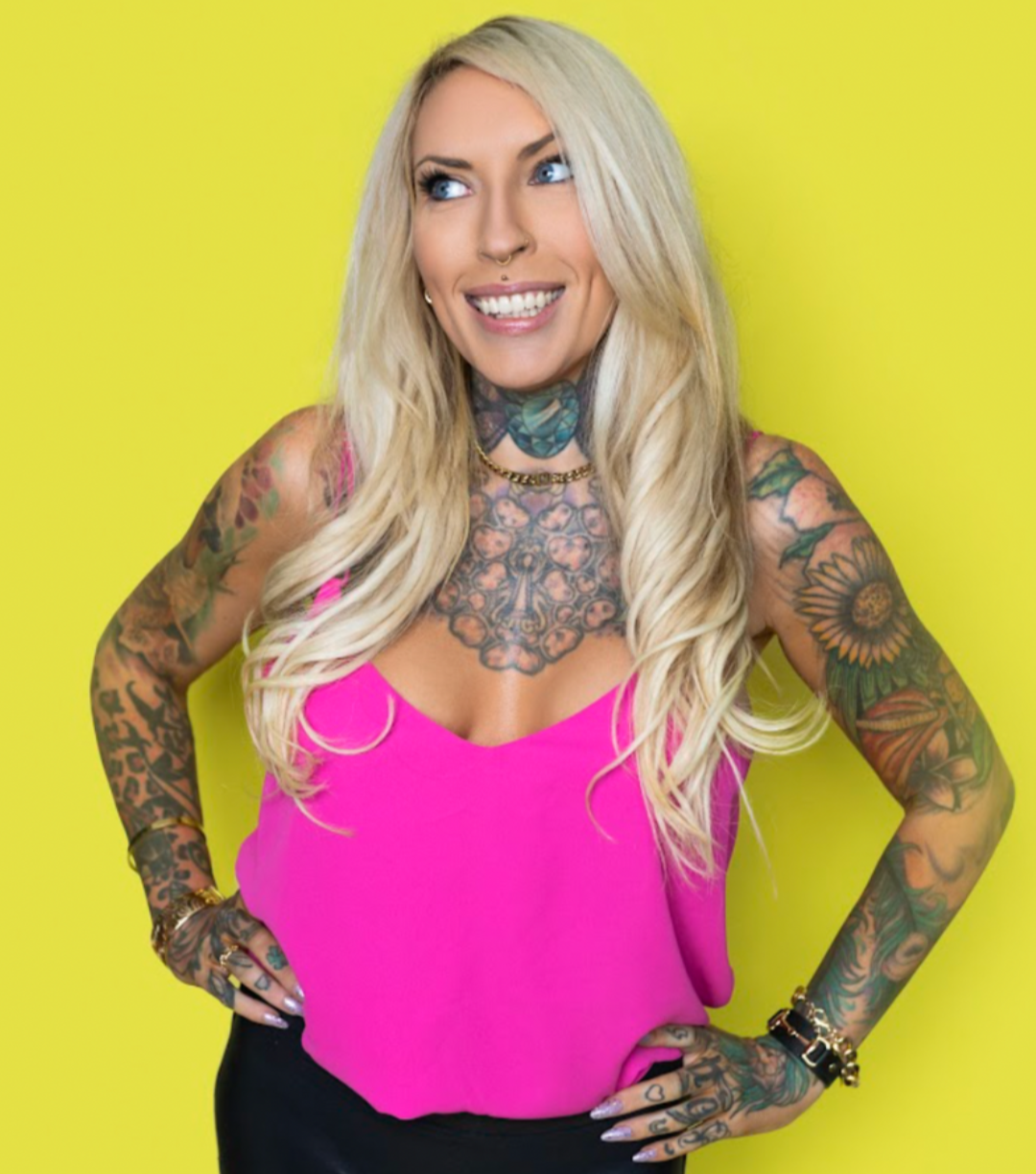
ABOUT Lea
Lea Turner is founder of The HoLT — an online membership community for freelancers, solopreneurs, and small business owners who are done doing it alone. She built a six-figure business as a solo mum from scratch, growing a following of over 200,000 people by being relentlessly herself online: tattooed, opinionated, and allergic to hustle culture nonsense. Recognised as one of the UK's leading LinkedIn trainers, Lea now channels her energy into The HoLT, where over 500 members get access to expert masterclasses, peer support, and a genuinely knobhead-free community.
The HoLT is an online and in-person community for small business owners, freelancers, solopreneurs and lonely remote workers who are sick of doing business alone.
Make 500+ new business friends, swap referrals, learn from masterclasses, and hive mind support and ideas with us in our very active community, where everyone is welcome, as long as you’re not a knob!