You Will never upset the right people
A conversation with Stacey Nicholson
WRITTEN BY: Lea turner
I get asked fairly regularly to be a guest on podcasts, and fairly regularly I say no. Not because I'm not flattered, but because my time is finite and I've learned to be selective about where I put it.
Stacey Nicholson is someone I said yes to. She's building something with real intention behind it, she asks good questions, and she didn't want a polished performance version of me. She wanted the real version - heaven help her!
So here's a bit of what we talked about.
How The HoLT actually started (it wasn't the plan)
I started using LinkedIn to find more clients for my transcription business. That's it. No grand vision, no community-building strategy.
But once I started getting visible, something became obvious fast: I could teach people how to get clients on LinkedIn, but if they didn't have a half-decent website, a way to capture leads, a welcome sequence, or any of the other hundred things a business actually needs, the LinkedIn bit didn't matter that much. They'd get eyeballs and then lose them.
I'd worked with email marketing specialists, coaches, copywriters, sales trainers. I'd been inside their communities, appeared on their podcasts, seen how they operated. And I kept thinking: what if all of that could live in one place, for a monthly fee people could afford?
That was the seed of The HoLT. Not a lifestyle business plan. Not a passive income scheme. A genuine answer to a gap I kept bumping into.
The other thing that pushed me toward it was my own experience of working alone. I'd sent about 300 invoices by hand, individually emailed, because I didn't know automation was a thing. I didn't know what I didn't know, because how would I? Nobody told me. There was no one to ask.
The HoLT was supposed to be the place I wish I'd had.
The logo era (and why I ditched it)
When I first started posting on LinkedIn, I used a logo as my profile photo. I wrote corporate-sounding posts. I tried to sound like what I thought a professional was supposed to sound like.
I posted about two of them, cringed, and stopped.
Then I just started interacting in comments. Hiding behind the logo. Until one day I thought: I'm not going to enjoy this unless I do it as myself. And if it doesn't work, I've lost nothing.
So I posted a selfie. I talked about being terrified I'd be run out of the corporate village because I'm covered in tattoos. I talked about being a solo mum. I told weird stories from jobs I'd worked.
My following went to 10,000 in two months. People were messaging saying they didn't even need transcription, they just wanted to work with me.
That's not because of a content strategy; it’s what happens when you stop performing and you’re just an honest, real human.
The conditioning problem
I want to be careful here, because I know it's easy for me to say "just be yourself."
I've never worked in corporate. I came out of school into minimum wage jobs, spent years around tradespeople and builders, never had to wear a suit or fit a particular mould. The one time I had a job that expected that, I lasted six months, called out a homophobic racist, and got my P45 the next day. And left quite happily.
So I haven't had the years of conditioning that tells you: this is how professional looks, this is who you have to be, this is what gets taken seriously.
A lot of people starting their own businesses after corporate are in a different position. They don't always know who they are outside of those guardrails yet. They've been performing a version of themselves for so long that authenticity feels uncomfortable. Like they're doing it wrong.
That's part of why the culture inside The HoLT matters. When you're surrounded by people of every age, background, body, sexuality, neurodivergence, when nobody's version of normal is the dominant one, it gets a lot easier to figure out who you actually are. You see people being bold and brave, and nothing bad happens to them. You watch someone push back smartly on something, and you think: actually, maybe I can do that too.
Who you're surrounded by shapes what feels possible.
What to do with trolls
I mostly just took screenshots and made content out of them.
If someone was going to try to make me feel bad about myself, the best response I could think of was to show them it hadn't worked (and make money from it in the process).
The most memorable version of this: I was hired to do a 20-minute comedy set at the London Comedy Store. I said yes because Robin Williams stood on that stage and you don't turn that down. I was terrified. I definitely had four vodkas first (I don't drink now). The set was me reading out horrible things people had said about me online, reading them cold off cards, with my live reactions on screen behind me.
£3,000. Spent on an all-inclusive holiday to Mexico with my son.
Make the trolls pay. Literally.
But the reason it doesn't really hurt me is that my self-esteem is solid enough that the comments don't land somewhere true. The trolls that do damage are the ones saying something you're already a little afraid might be right. If you've got unresolved insecurity about the way you look, a comment about your appearance will sting more. That's just how it works.
The goal isn't to be impervious. It's to know your intentions are good, to be able to sleep at night knowing you're doing things for the right reasons, and to get solid enough in yourself that the noise stays noise.
And practically: people who are actually doing well with their lives do not spend time writing horrible things to strangers on the internet. They just don't. So when it happens, that's useful information about who the comment is coming from. It’s pitiful, when you really examine it.
The one piece of advice
Stacey asked me at the end: if you could give one piece of advice to a woman still struggling to show up as herself online, what would it be?
This is it:
You will never upset or offend the right people.
If you are being kind, being reasonable, being true to yourself, and not deliberately hurting anyone, then the people you repel are not your people. That's not a tragedy, it’s the filter working correctly.
There are nearly 8 billion people in the world. If only 0.1% of them like what you do, that is still more people than you will ever meet in your lifetime. The 99.9% you're so worried about are not your audience. They were never going to pay your bills or cheer you on or refer you to someone else.
Stop giving them the energy you could be spending on the people who are genuinely for you.
Where The HoLT fits into all of this
The HoLT exists for people who are doing business alone and finding it isolating, confusing, or just harder than it needs to be.
It's not a pitching pool. It's not a place to collect business cards or sell to each other. It's 500+ people who are truly invested in helping each other succeed, with masterclasses, monthly speed networking, wellbeing circles, a book club, four years of recorded content in a library you can access from day one, and a chat that is always buzzing with activity. I'm in it every day. This is my only business.
If that sounds like what you've been looking for, come and join us.
Stacey Nicholson can be found on LinkedIn.
Watch the full episode with Stacey below.
About the Author
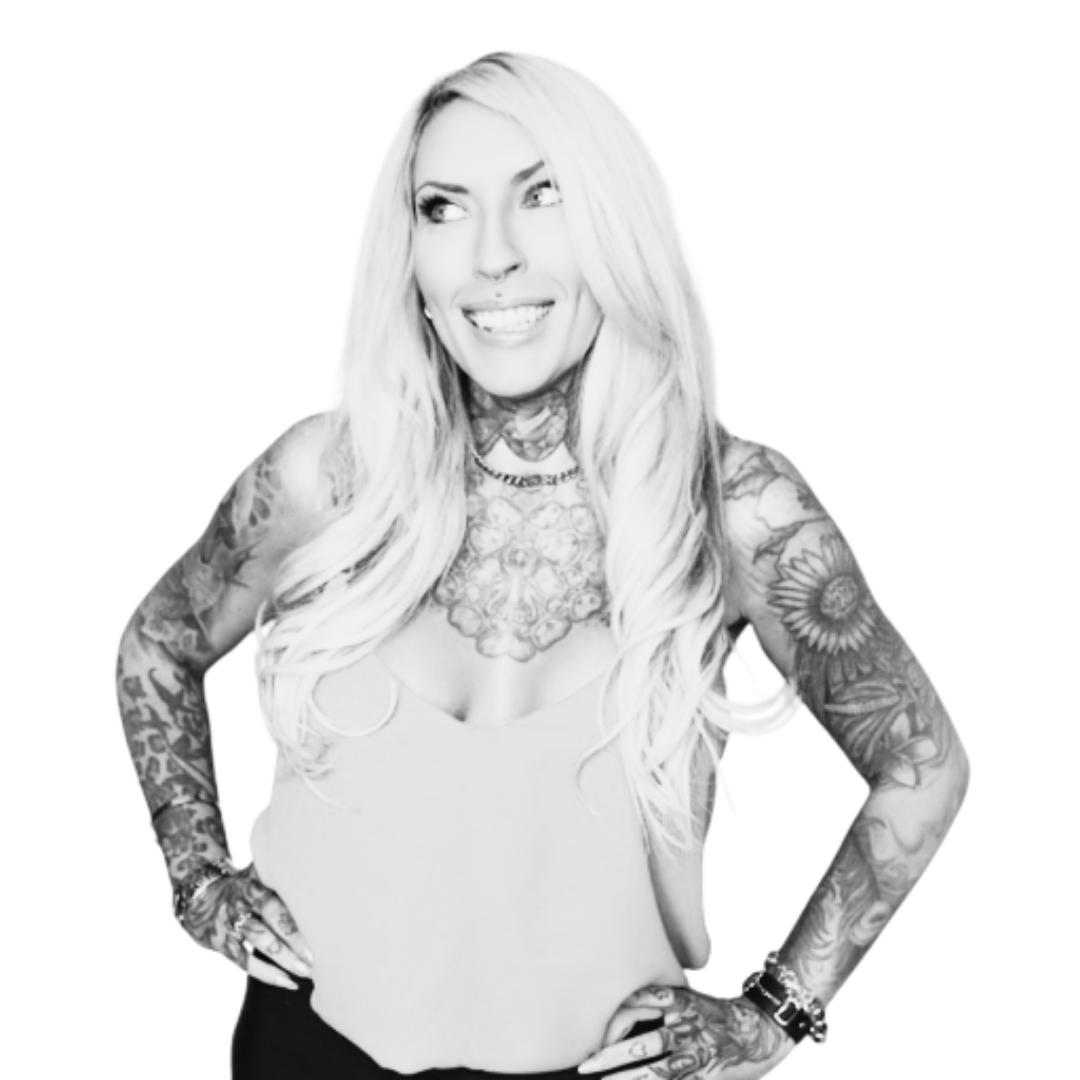
Lea Turner is the founder of The HoLT — a community for freelancers, solopreneurs and small business owners who want to build businesses they're proud of, without doing it alone.
Make 500+ new business friends, swap referrals, learn from masterclasses, and hive mind support and ideas with us in our very active community, where everyone is welcome, as long as you’re not a knob!